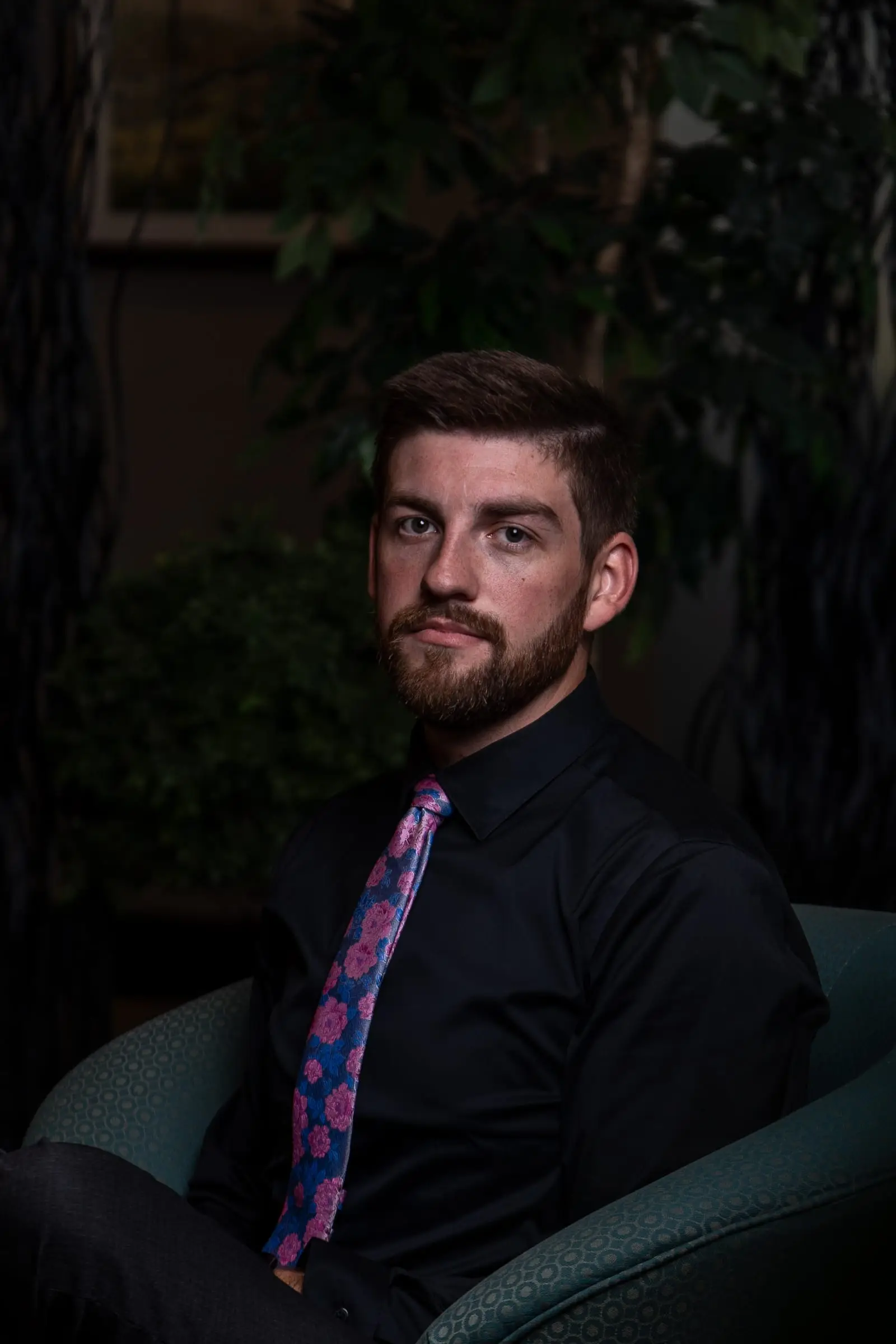
A patient choosing a provider is doing something no other customer does. They're picking a stranger to be physically vulnerable in front of, from a grid of thumbnails, in about four seconds, usually on a phone, usually while mildly anxious.
That is the entire job of a medical headshot, and it's why medical headshots in Lincoln, Nebraska are a meaningfully different problem than corporate headshots — even though the lights and the backdrop are the same. A software company's team page is decoration. A provider directory photo is the first step of patient intake, and it's doing that work whether anyone at the practice planned for it or not.
I shoot provider headshots for clinics, dental offices, and care teams around Lincoln, on-site and in the studio downtown. This guide is written for the person who usually ends up owning this project — the practice manager or office administrator who got told to "get everyone's photos updated before the new website goes live," and now has to figure out what that costs, how to schedule it around a full patient panel, and what to do about the physician who hates being photographed.
Why medical headshots aren't just corporate headshots
Three things make provider photos harder than an ordinary business portrait.
The photo goes to more places than you control. A corporate headshot lives on a website and LinkedIn. A physician's headshot ends up on the practice site, the health system's provider finder, two or three insurance network directories, the review sites patients actually use, a credentialing packet, a hospital badge system, and eventually a conference program. Most of those destinations crop the image differently, and some of them will re-compress it into mush. One file has to survive all of it.
The formality target is genuinely ambiguous. In law, you wear a suit. In medicine, the right answer depends on specialty, on whether you're hospital-employed or private, on whether the audience is patients or referring physicians, and on whether your health system has brand standards with opinions about white coats. Get this wrong and the photo is technically fine and strategically useless.
You're shooting inside a live clinical environment. Nobody photographing an insurance office has to think about who might walk into frame, what's on the whiteboard behind the backdrop, or whether a chart is visible on a monitor. In a working clinic, all of that is a real consideration, and it drives where you can physically set up.
None of these are camera problems. They're planning problems, which is good news — they're all solvable in advance and for free.
Where a medical headshot actually gets used
This is the section I wish more practices read before booking, because it explains why "just send me the photo" produces bad outcomes. One session should produce one image, delivered in several crops, that works across all of these.
| Destination | What it needs | Common failure |
|---|---|---|
| Practice website team page | Consistent backdrop and grade across the whole roster; usually a wide or square crop | Mismatched photos from three different years and three different photographers |
| Health-system or hospital provider finder | Often a strict square or portrait ratio, plain light background, frequently a white coat | A photo cropped so tight it can't be re-cropped to their spec |
| Insurance and payer directories | Small, heavily compressed, low-fidelity rendering | Busy backgrounds and low contrast turn to noise at thumbnail size |
| Patient review and booking sites | A warm, approachable expression at very small size | A formal, unsmiling frame that reads as cold when shrunk |
| Credentialing and badge systems | Plain background, head-and-shoulders, specific dimensions, hard deadline | Getting the request two days before it's due |
| LinkedIn, referral networks, speaking bios | Square crop, more editorial latitude | Using the same tight clinical crop everywhere |
The practical upshot: ask for your files in multiple crops from a single sitting. A square, a vertical, and a wider frame with room around the head. That last one matters more than people expect, because a photo shot tight cannot be loosened later, and half the systems above will demand their own ratio. Shooting a little wide costs nothing on the day and saves a reshoot in eighteen months.
The white coat question, settled
This is the most common question I get from providers, and the answer is genuinely simple once you stop treating it as one decision.
Shoot both. Business attire first, then the coat over the same outfit. It adds about four minutes to the sitting, it's the same lighting setup, and you leave with two usable looks instead of a decision you might regret.
Then use them deliberately:
- The coat reads as clinical authority. It's usually right for hospital and health-system bio pages, for specialists whose patients arrive by referral, and anywhere the audience is other physicians.
- Business attire reads as approachable and human. It tends to perform better on patient-facing booking and review profiles, in primary care, pediatrics, dentistry, behavioral health, and anywhere the patient is choosing you rather than being sent to you.
Two details worth getting right on the day. A clean, pressed coat — not the one that's been in the car. And if your name and credentials are embroidered on it, that embroidery should be legible in the frame, which means it needs to be lit and positioned rather than left to chance.
If your health system publishes brand standards for provider photography, get them before the shoot rather than after. They occasionally specify background color, coat policy, or crop, and it is far cheaper to shoot to that spec than to discover it during the website build.
Scrubs, care teams, and the roster that never stops changing
Providers aren't the whole team page, and the rest of the staff is where practices tend to get inconsistent.
Scrubs photograph well when they're clean and a solid color. A medical assistant or hygienist in matching practice-colored scrubs reads as more honest than the same person forced into a blazer they've never worn at work. If your practice has brand colors, use them — a team page where the clinical staff are in one consistent color and the providers are in coats has a visual logic patients read instantly, even if they'd never describe it.
The harder problem is turnover and growth. You photograph fourteen people this spring. By next spring you've hired two hygienists, an associate dentist, and a nurse practitioner, and their photos came from a phone in the break room. Now your team page is three-quarters matched portraits and one-quarter something else, which looks exactly as patched-together as it is — and it's the specific thing that makes a practice look smaller and less established than it actually is.
The fix is procedural, not photographic: whoever shoots your roster should keep the setup on file — backdrop, lighting positions, camera settings, crop, and color grade — so a new hire's session drops into the wall seamlessly months later. That's how team headshots are built here, and it turns adding a provider into a single $200 sitting instead of a reason to re-shoot everyone. Ask any photographer you're considering whether they do this. Many don't, and the answer determines what this costs you over five years rather than one afternoon.
Shooting inside a working clinic
An on-site clinic headshot day is the right call for most practices, because getting twelve providers to drive to a studio on twelve different days is a project that never actually finishes.
What it takes physically. One backdrop and two lights, in a footprint about the size of an exam table. A break room corner, an unused exam room, or a wide stretch of hallway all work. Setup runs about thirty minutes. Each provider needs ten to fifteen minutes in front of the camera, and shots get reviewed on a monitor as we go so nobody leaves wondering whether theirs worked.
How it fits a patient schedule. We build a stagger sheet around your clinic day rather than the other way around — providers rotate through between appointments or across the lunch block, and the practice never stops seeing patients. The most common scheduling mistake is booking the photography for a day the schedule is already tight; the second most common is not telling the providers until that morning, which guarantees somebody shows up in the wrong shirt.
On patient privacy — the practical version. Your compliance officer, not your photographer, is the authority on what your practice's obligations are, and you should route this through them rather than through me. What I'll tell you is what competent practice looks like operationally: set up away from patient care areas and sign-in, position the backdrop so nothing behind it is in frame, confirm no monitors, whiteboards, charts, or schedules are visible in the background, and treat any patient walking through as a hard stop rather than something to edit out later. A photographer who has worked in clinics will raise all of this before you do. One who hasn't will point a camera at the nurses' station.
When the studio is the better answer. Some providers would rather not be photographed at work, and some practices genuinely have nowhere to put a backdrop. The studio at 1200 N Street downtown handles the one-offs — the new associate who missed clinic day, a resident refreshing a fellowship application, a practice owner who wants something more editorial for a speaking bio. More on the space is on the studio page.
What medical headshots cost in Lincoln, NE
Published rates, which is apparently rare enough in this industry to count as a feature. These are the same numbers on the investment page and the medical headshots page.
| Option | Price | What you get |
|---|---|---|
| Individual session | $200 | 30 minutes, 10 fully color-graded selects, same-week delivery |
| Brand portrait | $450 | 60 minutes, 25+ selects, two looks, studio or on-location |
| Team — 5 providers | ~$150 / person | On-site, consistent lighting across the roster |
| Team — 10 providers | ~$130 / person | On-site, one setup, staggered around your schedule |
| Team — 20+ providers | ~$100 / person | On-site, best per-head rate, ideal for multi-provider groups |
The per-head rate falls as the roster grows because setup happens once regardless of how many people rotate through it. No sitting fees stacked on top, no paying again per photo afterward.
The honest recommendation on which to pick: under five people, book individual sessions. At five and up, the team tiers win, and they win harder the larger the practice. A solo provider who needs one strong photo for a directory should take the $200 session and be done in half an hour — the $450 brand portrait is for someone whose face is doing marketing work beyond a directory thumbnail, which for most clinicians it isn't.
On the wider Lincoln market: individual professional headshots here run roughly $150 to $400+, and group rates vary enormously depending on whether retouching, travel, and licensing are actually included or arrive later as line items. That variability is the thing to interrogate, not the headline number.
Turnaround, credentialing deadlines, and usage rights
Three things to get in writing from anyone you hire, including me.
Delivery date. Individual and team headshots deliver same week, and a two-week delivery commitment is written into every contract I sign. This matters more in healthcare than in most fields, because credentialing packets, hospital onboarding, and directory submissions all run on external deadlines you don't control. If a photographer won't commit to a date on paper, that's your answer.
Usage rights, in plain language. Files come with a commercial license — practice website, health-system directories, insurance listings, print, social, done. No per-use fees and no discovering in two years that you have to pay again to keep your own providers' faces on your own website. Ask this question before booking anyone; the industry is genuinely split on it.
Retouching policy. Color grading and light, natural skin work are included on every select, done frame by frame rather than by an auto-smoothing filter. The standard I hold to is that a patient should recognize the person in the photo when they reach the front desk. A headshot that oversells is worse than one that undersells, and in medicine that's not just an aesthetic position — the photo is part of how a patient decides whether to trust the practice.
What to ask before a photographer sets foot in your clinic
- "Have you shot inside a working clinic before?" The answer determines whether you'll spend the morning explaining where they can't stand.
- "Do you keep the lighting setup on file for future hires?" If no, budget for a full re-shoot every time the roster changes.
- "Can I get multiple crops from one sitting?" Square, vertical, and a wider frame. You will need all three.
- "What's the written delivery date?" Not "about a week."
- "What does the license actually permit?" Get the destinations listed.
- "What's the plan if a provider gets pulled into a patient issue?" Clinic days run long sometimes. A photographer who has done this builds slack into the stagger sheet.
Frequently asked questions
How much do medical headshots cost in Lincoln, NE? An individual provider session is $200 for 30 minutes and 10 color-graded selects, delivered the same week. Team pricing runs about $150 per person at five providers, $130 at ten, and $100 at twenty or more — on-site at your practice. Under five people, individual sessions usually make more sense than a team rate.
Should providers wear a white coat or business attire? Bring both and shoot both in the same sitting — it costs a few extra minutes and gives you two usable looks. Coats tend to suit hospital and health-system bio pages and referral-driven specialties; business attire tends to perform better on patient-facing booking and review profiles, in primary care, dentistry, and behavioral health.
Can you photograph our team on-site without disrupting patients? Yes, and it's how most clinic sessions run. Setup takes about thirty minutes in a footprint the size of an exam table, each provider needs ten to fifteen minutes, and the schedule is built around your patient day so providers rotate through between appointments. Your compliance officer should sign off on the location; we set up away from patient care areas and keep everything clinical out of frame.
Can medical assistants and hygienists be photographed in scrubs? Yes. Clean, solid-color scrubs photograph well, and matching practice colors across clinical staff look more genuine than putting everyone in blazers they'd never wear at work.
What happens when we hire a new provider next year? Your lighting setup, crop, and color grade stay on file, so a new hire books a short individual session and their photo matches the existing roster. That's a $200 sitting rather than a reason to re-photograph everyone — and it's the single biggest thing separating a team page that looks institutional from one that looks assembled.
How often should a practice refresh provider photos? Every two to three years as a baseline, sooner if someone's appearance has genuinely changed or the practice rebrands. New hires should be photographed within their first month — a gray placeholder silhouette next to a wall of finished portraits reflects worse on the practice than on the hire.
Do you shoot dental, optometry, chiropractic, and behavioral health too? Yes. The setup and the pricing are identical; only the wardrobe conventions shift. Dental and optometry practices tend to lean more heavily on the clinical-staff team shots, and behavioral health almost always favors business attire over anything that reads as clinical.
Where to start
If you take one thing from this: the expensive mistake in medical headshots isn't paying too much for the session. It's buying a photo that only works in one of the six places it needs to live, then paying again eighteen months later when the roster has drifted out of sync.
Fix that with two decisions made before anyone picks up a camera. Get the crops you'll need out of a single sitting, and confirm your photographer keeps the setup on file for future hires. Those two things cost nothing extra on the day and determine what the next five years of team-page maintenance costs you.
If you've got a website launch or a credentialing deadline coming, book a free 30-minute consultation or reach out directly — bring your provider count and location and you'll get an exact per-head number, not a range. If you'd rather see the work first, the headshot portfolio is the fastest way in, and the medical headshots page covers the clinic-day logistics in more detail. Law firms running the same roster problem should start with the attorney headshots guide instead, and the broader approach lives on the Lincoln headshot photographer page.