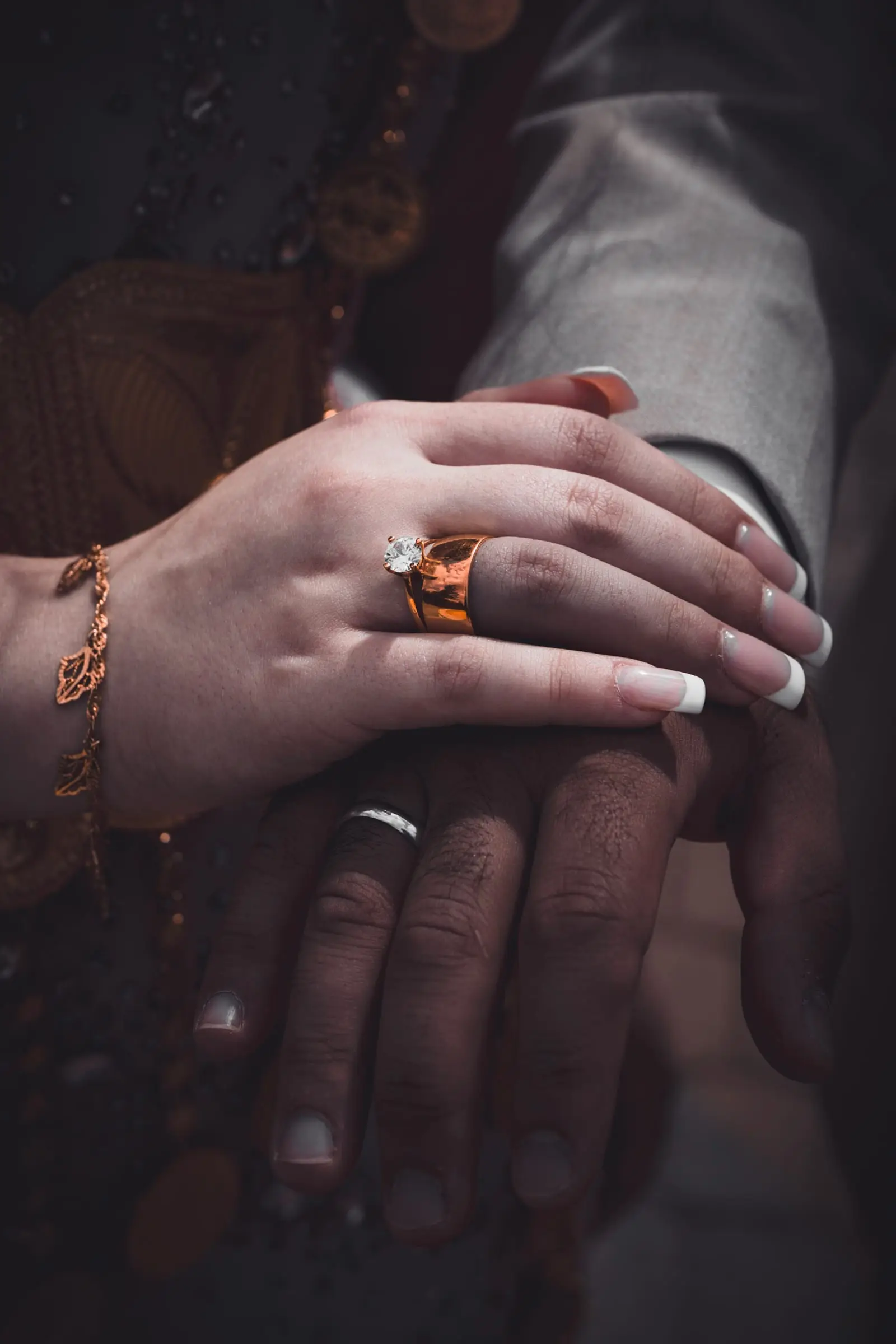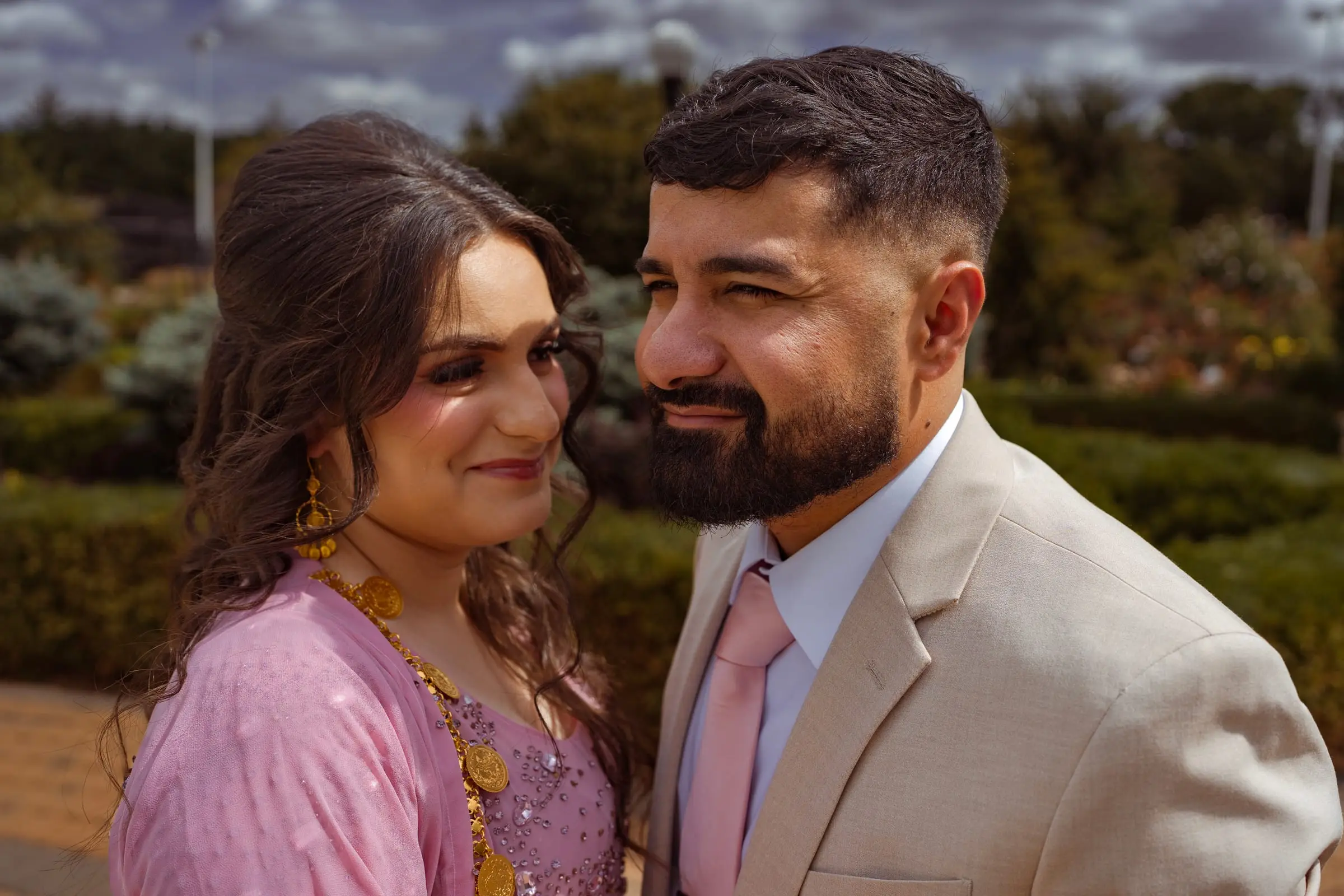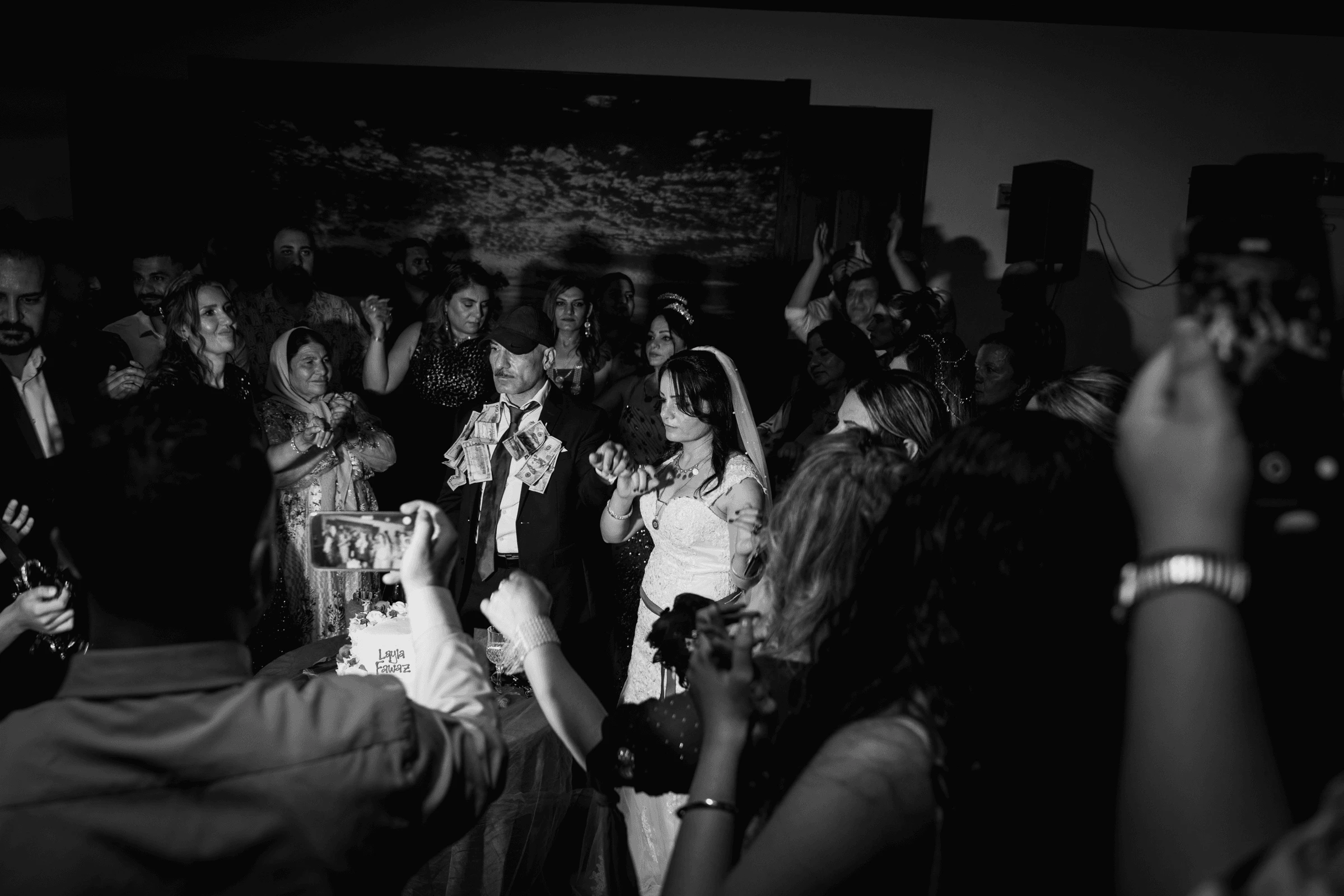
There's a question every couple asks somewhere between the second and third consultation, and it's almost always phrased the same nervous way: "How many hours of wedding photography do we actually need?" It sounds like a logistics question. It isn't. It's the single decision that determines which parts of your wedding day exist in ten years and which parts only exist in the memories of the people who were standing in the room.
Most Lincoln photographers will answer it with a package number — six, eight, ten — because packages are how the industry prices itself. That's a useful shorthand and a bad answer. The right number of hours isn't a tier. It's arithmetic you can do yourself, based on your ceremony time, your venue count, your family size, and what time the sun goes down in Nebraska on your specific date.
So this guide is the arithmetic. What each coverage length genuinely buys you in this market, how to count your own hours backwards from the two fixed points on your day, the three blocks that quietly eat time nobody budgets for, and the honest cases where booking fewer hours is the smarter call. No upsell math. If your day is a four-hour day, I'll tell you it's a four-hour day.
The short answer
Most Lincoln and Omaha couples land on eight hours of wedding photography coverage, and that number is not an accident — it's the shortest block that reliably holds getting-ready through the first hour of dancing without cutting something you'll miss.
But "most couples" is not "your wedding." Here's the honest map:
| Coverage | What it realistically holds | Best fit |
|---|---|---|
| 3–4 hours | Ceremony + portraits + a handful of reception frames | Courthouse, elopement, small ceremony-only day |
| 5–6 hours | Late getting-ready, ceremony, family, portraits, reception start | One venue, small guest list, no first look |
| 8 hours | Getting-ready through first dances and toasts | The default full wedding day in this market |
| 10 hours | Full getting-ready, two venues, golden-hour portraits, open dancing | Two-location days, larger guest lists |
| 12+ hours | Prep through exit, multi-event or cultural days | Multi-day, cultural, or 250+ guest weddings |
If you take one thing from this post: the hours you need are set by your ceremony start time relative to sunset, not by how long you'd like the party photographed. Everything below is downstream of that.
Why hours are really a decision about what you keep
A wedding day has roughly nine photographable blocks: details and getting ready, the dress, a first look (or not), wedding party, family formals, ceremony, couple portraits, reception details and entrances, and dancing. Coverage hours are simply how many of those nine you're buying.
The trap is that couples cut from the wrong end. When the number needs to come down, the instinct is to trim the front — "we don't need two hours of hair and makeup photos." Fair enough; getting-ready coverage is genuinely the most compressible block. But the cut that actually happens on the day is at the back, because weddings run late and the photographer's clock is a hard stop. Nobody plans to lose the first dance. It just arrives twenty minutes after the coverage ended.
The second trap is subtler: couples buy hours for the reception and starve the middle. Dancing photos are fun and they are also, honestly, the most replaceable images in the gallery — every reception looks broadly like every reception after 9pm. Couple portraits in good light are the photos that end up on the wall. If you're choosing between an extra hour of dancing and forty protected minutes at sunset, take the sunset every single time.
So before you pick a number, rank the nine blocks. The hours follow the ranking.
What each coverage length buys you in Lincoln
Four hours
Four hours is a real product, not a consolation prize, and this market has more genuinely great four-hour weddings than the industry admits. It covers a ceremony, family formals, couple portraits, and enough reception to capture entrances and the cake. It does not cover getting ready, and it does not stretch to dancing.
Four hours works when your ceremony and reception are at one address, your guest list is under about 75, and your family formal list is short. It fails the moment there's a drive between venues — a 20-minute transit eats 15% of your total coverage.
This is the honest fit for a Sunken Gardens ceremony with a small dinner after, a courthouse morning, or a backyard wedding in Lincoln with 50 people and a taco truck. If that's your day, buy four hours and spend the difference on the food.
Six hours
Six hours is the most misunderstood package in the market. On paper it looks like a full wedding. In practice it holds a full wedding only if you do a first look — because the first look collapses wedding-party, family, and couple portraits into the pre-ceremony window instead of stacking them into the 45 minutes between the ceremony and dinner.
With a first look, six hours reliably covers: the last 45 minutes of getting ready, the first look and portraits, the ceremony, family formals, cocktail hour, entrances, toasts, and the first dance. Without a first look, six hours means you'll be photographing family formals while your cocktail hour happens without you, and there will be no golden-hour portrait session because the sun will have moved on.
Six hours is a good, defensible choice for a one-venue Lincoln wedding with a 4pm or 4:30pm ceremony. It's a bad choice for a 6pm ceremony in June, when the whole day is compressed against a 9pm sunset.
Eight hours
Eight is the default for a reason. It's the first number that lets a day breathe. Typical shape: photographer arrives at 1:00pm for details and getting ready, first look at 2:30, portraits and party at 3:00, family at 4:00, ceremony at 5:00, cocktail hour, sunset portraits at 7:30, entrances and dinner, first dances, out at 9:00pm.
Every one of those blocks has slack in it, which matters more than the blocks themselves. Hair and makeup runs 25 minutes long roughly every other wedding. The receiving line you didn't plan takes half an hour. Eight hours absorbs one or two of those without anything getting cut. Six hours absorbs none.
If your wedding has a ceremony, a reception, a guest list between 100 and 200, and you want the day documented start to finish, eight hours is almost certainly your number and you can stop reading the comparison charts.
Ten hours
Ten hours buys two things specifically: a second location, and open dancing. Neither is a luxury if your day requires them.
The two-venue case is common here — a church ceremony downtown and a reception at a vineyard or barn outside city limits. Lincoln's geography is forgiving compared to a big metro, but the drives are real: downtown to the Raymond area runs about 20–25 minutes without traffic, and a 60-guest transit never moves as fast as the couple's car does. Add loading, arrival, and reset on both ends, and a venue change costs you 45–60 minutes of coverage that produces almost no photographs. That hour has to come from somewhere. Ten hours is where it comes from.
The dancing case is simpler: if your reception is the event — if you have a live band, a big cultural dance tradition, or a crowd that will genuinely be on the floor until midnight — eight hours will end while the party is at its peak. Ten gets you deep into it.
Twelve hours and up
Twelve-plus is for days that are structurally larger, not days that merely feel important. Multi-event cultural weddings, ceremonies with a separate religious and civil component, weddings with a rehearsal dinner or next-morning brunch inside the same coverage, or 250+ guest weddings where family formals alone are a 90-minute operation.
At this length the conversation stops being about hours and starts being about crew. A single photographer shooting twelve hours is a photographer whose last two hours are worse than their first two — that's not cynicism, it's biology. Twelve-hour days should be quoted with a second shooter and a real meal break built in. If a quote hands you twelve hours with one exhausted human and no break, that's a scoping problem, not a bargain.
How to count your own hours, backwards
Here's the method. It takes about five minutes and it's more accurate than any package chart.
Step 1 — find your two fixed points. Ceremony start time and sunset. Your ceremony time is set by your venue or officiant. Sunset in Lincoln is set by physics. Approximate figures for Lincoln, NE:
| Wedding date | Approximate sunset | Golden-hour portrait window |
|---|---|---|
| Mid-April | ~8:05 pm | 7:15 – 8:05 pm |
| Mid-June | ~9:00 pm | 8:10 – 9:00 pm |
| Mid-August | ~8:25 pm | 7:35 – 8:25 pm |
| Mid-September | ~7:35 pm | 6:50 – 7:35 pm |
| Mid-October | ~6:45 pm | 6:00 – 6:45 pm |
| Mid-November | ~5:05 pm | 4:25 – 5:05 pm |
| Mid-December | ~5:00 pm | 4:20 – 5:00 pm |
Note what happens after the clocks change in early November: sunset drops to roughly 5pm, which means an autumn or winter wedding with a 4pm ceremony has no outdoor portrait window after the ceremony at all. That's not a reason to avoid a winter wedding — the indoor and blue-hour work can be beautiful — but it changes where the hours go. More on the seasonal side in my guide to the best time of year to get married in Nebraska.
Step 2 — work backwards from the ceremony. Whatever happens before the ceremony has a fixed length. Family formals need 30–45 minutes. Wedding party needs 30–45. A first look plus couple portraits needs 45–60. Getting-ready coverage needs 60–90 if you want the whole arc, 30 if you only want the dress and the final ten minutes.
Step 3 — work forwards from the ceremony. Cocktail hour is 60 minutes and you'll spend most of it doing whatever formals didn't happen before the ceremony. Entrances and dinner run 60–75. Toasts run 20 (they run 20 whether they're scheduled for 10 or 30). First dances run 20. Add 30–45 minutes of open dancing if you want it documented.
Step 4 — add the transit. Every venue change: 45 minutes, minimum, all-in.
Step 5 — add a buffer. Twenty minutes for an eight-hour day, thirty for a ten-hour day. Not optional. This is the buffer that pays for the hair-and-makeup overrun, and if it goes unused you get twenty extra minutes of good photographs instead.
Add it up. That number is your coverage. If it lands at 7.5 hours, book eight — nobody has ever regretted the half hour. For the full hour-by-hour version of this exercise, including three sample schedules you can copy, see the Lincoln wedding photography timeline guide.
The three blocks that quietly eat hours
Family formals. Universally underestimated, universally the thing that runs long. The math is brutal and simple: each distinct grouping takes roughly two to three minutes once you include the wrangling — finding Uncle Dave, waiting for someone to set down a drink, one person blinking. Twenty groupings is an hour. Couples routinely tell me they have "just a few family photos" and then hand over a list of 24 combinations. Write the list in advance, cap it at 15 groupings, and assign one loud relative from each side to physically retrieve people. That single move saves 20 minutes on most weddings.
Getting ready that isn't ready. The photographer's start time assumes there's something to photograph. If the dress is still in a garment bag in another room, the rings are in someone's car, and the bridal suite is a laundry pile, the first thirty minutes of paid coverage becomes set dressing. Have the details — rings, invitation, shoes, jewelry, perfume, vow books — in one place before the photographer walks in. It costs nothing and it converts half an hour of coverage from cleanup into photographs.
Travel that isn't just travel. A 20-minute drive is never 20 minutes. It's a 10-minute gather, a 20-minute drive, a 10-minute park-and-find-the-room, and a 5-minute reset. Budget 45. If your ceremony and reception are at different addresses, this is the most reliable predictor that you need more hours than you think.
When fewer hours is the smarter call
I'd rather write this section than have a couple overspend and resent it.
Book fewer hours if your ceremony and reception are at one address and your guest list is under 75. Small one-venue weddings genuinely compress. Six hours can cover almost the entire arc.
Book fewer hours if you're doing a first look. It's the single highest-leverage decision available to you. A first look moves 60–90 minutes of portrait work out of the post-ceremony crunch and into a window you control, which can be the difference between a ten-hour day and an eight-hour one.
Book fewer hours if the reception genuinely isn't the point. Plenty of couples have a beautiful ceremony, a dinner, and are home by nine. Paying to photograph a dance floor you don't intend to fill is the most common form of overspend in this market.
Book fewer hours and add a second shooter instead. If your budget is fixed and you're choosing, a second photographer for the ceremony and reception adds more to the gallery than a ninth hour does — you get the aisle and the faces, the vows and the reaction, the dance floor from two angles. Coverage length adds duration; a second shooter adds density. For a wedding with a big guest list, density usually wins.
The corresponding tier logic — what each of those choices costs and what's inside each bracket — is broken down in the Lincoln wedding photography cost guide.
Adding hours later versus booking them upfront
Almost every wedding photographer in Lincoln will let you add coverage on the day. Almost every one charges more for it than they would have upfront — typically in the $200–$400 per hour range in this market, and the day-of rate is usually the top of that band.
That's not a gouge. Day-of hours are genuinely more expensive to deliver: they're unplanned, they extend the edit, and they come at the end of a long day when the photographer had a hard-out and now doesn't. But it does mean the arithmetic favors honesty upfront. If you think there's a real chance you'll want that ninth hour, price both scenarios before you sign.
Two questions worth asking any photographer you're considering:
- "What's your hourly rate for adding coverage on the day, and does it differ from adding it in advance?"
- "If my timeline runs 30 minutes late, what actually happens at the end?"
The second one is the tell. A photographer who says "we'd stay and bill the overage" is being straight with you. One who says "it's never a problem" hasn't shot enough weddings, and one who says "we stop at the contracted time, full stop" is at least honest about the hard stop — plan around it.
At NVAR, coverage is scoped to the actual day rather than sold as a fixed ladder, and the current rate structure lives on the investment page. If you want the whole planning framework in one place, the wedding guide covers the rest of it.
Frequently asked questions
How many hours of wedding photography do most couples book in Lincoln, NE? Eight hours is the most common booking in the Lincoln and Omaha market. It's the shortest coverage that holds getting-ready through the first dances with enough slack to absorb a normal timeline overrun. Smaller one-venue weddings frequently do well at six.
Is 6 hours of wedding photography enough? Yes, if you do a first look and everything happens at one address. Six hours without a first look means portraits, family formals, and cocktail hour all collide in the same 45-minute window, and something gets cut — usually the couple portraits, which are the photos you'll want most.
Do I need photography coverage for the whole reception? Almost never. Reception coverage has steep diminishing returns; after about 45 minutes of open dancing, the images start repeating. Most couples get more value ending coverage after the first dances and toasts and spending the difference on a second shooter or an album.
How much does it cost to add an extra hour of wedding photography? In Lincoln, added hours typically run $200–$400 each, with day-of additions usually priced at the higher end. Ask for both the advance rate and the day-of rate before signing — the gap between them is real and it's rarely on the price list.
Should I buy more hours or a second photographer? If your guest list is over about 150, or your ceremony and reception rooms are large, buy the second shooter first. Extra hours extend the timeline; a second shooter increases how much of each moment you actually get. For a small, intimate wedding, the extra hour is usually the better buy.
Does a first look really reduce how many hours I need? Yes — it's the most reliable way to cut coverage without cutting photos. A first look shifts wedding-party and couple portraits into the pre-ceremony window, which regularly takes a day from ten hours down to eight and preserves the golden-hour session besides.
What happens if my wedding runs late and I hit the end of my coverage? That depends entirely on your contract, which is why you should read that clause before you sign it. Some photographers bill overage in 30-minute increments; some have a hard stop because they have a second commitment. Neither is wrong, but you need to know which one you hired.
Where to go from here
Pick your ceremony time, look up your sunset, and run the backwards count. Most couples who do that exercise discover they need either exactly what they assumed or one hour more — and finding out in February is a very different experience than finding out at 8:40pm on the day.
If you'd rather have someone run it with you, that's genuinely most of what a consultation is. Bring your ceremony time, your venue list, and your rough guest count, and we'll build the number together — including telling you if your day is a six-hour day, because it sometimes is. You can see the full scope of what wedding coverage includes on the Lincoln wedding photographer page, browse recent work in the portfolio, or just book a consultation and we'll do the math.