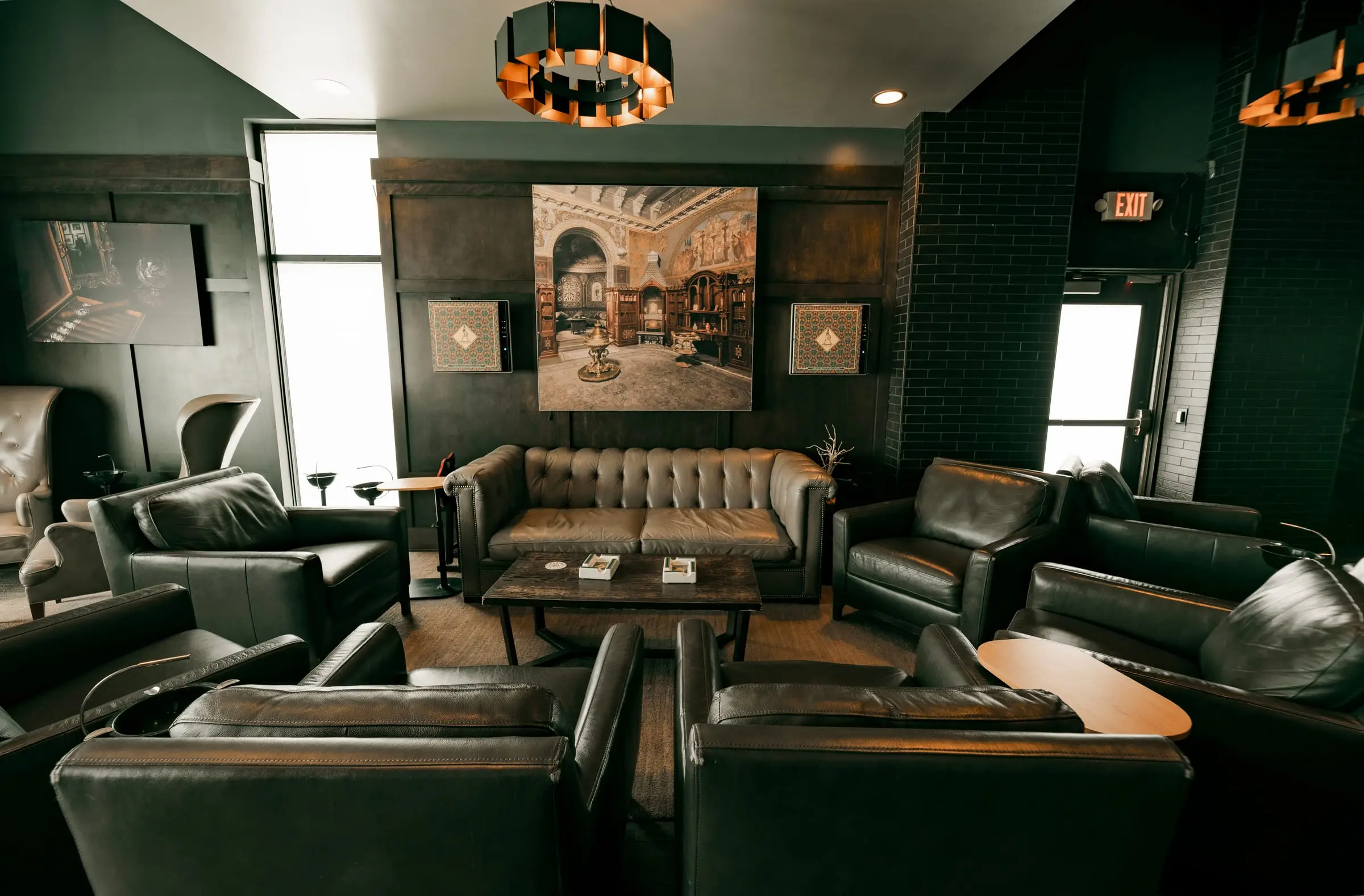
A house sells to a family who fell in love with it. A building sells to somebody with a spreadsheet open.
That single difference is why commercial real estate photography in Lincoln, Nebraska is a genuinely different job from listing photography, and why so many commercial listings in this market look like a residential shooter got handed an office park and did their best. The angles are residential. The lighting is residential. The shot count is residential. And the buyer — a broker's client running cap rate math on a 14,000 sq ft flex building off Cornhusker — scrolls past, because none of the four things they needed to see are in the gallery.
I shoot listings, interiors, and commercial work across Lincoln and Omaha. This is the honest version of what commercial property photography costs here, what it has to accomplish, what changes by property type, and how to prep a building that has tenants in it. If you're a broker, a property manager, an owner marketing a building yourself, or a developer with a lease-up coming, this is written for you.
Commercial real estate photography vs. listing photography
They share a camera bag and almost nothing else.
Residential listing photography sells a feeling. Bright, warm, wide, aspirational. Twenty-five images, mostly interiors plus a front elevation, 60–90 minutes on site, MLS-ready in 24 hours. The buyer is imagining their couch in the room. That work is priced on the Lincoln real estate photographer page — $175 for a standard listing — and broken down in more detail across the journal.
Commercial real estate photography sells a proposition. The viewer is not imagining a couch. They're asking: how much usable square footage, what's the ceiling height, where does the truck back up, how many parking stalls, what condition are the roof and the lot in, what's the visibility from the street, and what does the tenant mix look like. Those questions get answered by photographs, and they are not the photographs a residential shooter takes.
The practical consequences:
- Exteriors matter more than interiors. For most commercial assets, the building envelope, the lot, the loading, the signage, and the street presence carry the listing. A residential shoot spends most of its time inside. A commercial shoot often flips that.
- Empty rooms are the product, not a problem. Vacant white-box space photographed honestly — clean, square, evenly lit, showing the full bay — is more useful than a staged corner.
- The details are technical. Electrical panels, dock doors, clear height under the joist, floor drains, rooftop HVAC, ADA parking. A commercial gallery that skips these is missing the questions.
- You're shooting for a document, not just a feed. Offering memorandums, brochures, and site plans need a specific set of images at print resolution, in a specific orientation.
- Tenants exist. In an occupied building you're negotiating access, faces, signage, and confidentiality before you ever set up a tripod.
What commercial real estate photography costs in Lincoln, NE
Here's the part most sites won't publish. NVAR's commercial work starts at $600 for a half day — the same rate listed on the Investment page — and commercial property gets quoted per building rather than in square-footage brackets, because a 3,000 sq ft retail suite and a 3,000 sq ft machine shop are not the same day of work.
These are the bands most Lincoln commercial properties fall into with us:
| Property scope | Typical range | Roughly what that covers |
|---|---|---|
| Single retail or office suite, vacant | $300 – $450 | 15–25 HDR images, interior + exterior, 1–2 hours on site, 48-hour delivery |
| Small commercial building or multi-suite office | $600 (half day) | 30–45 images, full exterior set, common areas, detail shots, print + web sizing |
| Industrial, flex, or warehouse | $600 – $900 | Half to full day, full bay coverage, loading and dock detail, yard and lot, clear-height documentation |
| Multifamily / apartment lease-up | $900 – $1,500 | Full day, each unit type, amenity spaces, common areas, exteriors, reusable marketing library |
| Full-day portfolio or multi-property | $1,200+ | Whole day, multiple buildings or a full asset package, coordinated in one route |
| Add: walkthrough video | from $600 | Edited property walkthrough — see Lincoln video production |
| Add: construction progress series | quoted monthly | Recurring documentation — see construction progress photography |
Two honest notes on those numbers.
First, I'm not publishing a market survey. Nobody in Lincoln posts their commercial rates, and I'm not going to invent brackets I can't verify. What I can tell you is that a commercial shoot should cost more than a listing shoot in this market and less than a full brand campaign, and that a quote landing at or below the residential listing rate for a commercial building usually means the shooter is treating it as a house.
Second, per-property quoting is a feature. When a shop hands you a square-footage bracket for commercial work, they're guessing at the variable that actually drives cost — and it isn't floor area. It's access, occupancy, and how many separate spaces have to be lit.
What actually moves the price
Four levers, and square footage is the weakest of them.
Occupancy. A vacant building is a photography problem. An occupied building is a logistics problem with a photography problem inside it. Tenant notice, coordinating around business hours, staging around staff and customers, keeping faces and confidential material out of frame — that's real time, and it's the single biggest swing in a commercial quote.
Number of distinct spaces. Not total square footage — how many rooms have to be individually lit and composed. A 20,000 sq ft open warehouse can shoot faster than a 6,000 sq ft office with fourteen private offices, a conference room, a break room, and two restrooms.
Lighting condition. Mixed lighting is the tax nobody quotes for. Aging fluorescent tubes at three different color temperatures, a wall of west-facing glass, and a dark interior corridor in the same frame is a bracketing-and-blending job, not a snapshot. Warehouses lit by old high-bays are their own particular flavor of ugly and take real work to neutralize.
Deliverable set. Web-only for LoopNet is one thing. Print-resolution images laid out for an offering memorandum, plus vertical crops for social, plus a walkthrough video, is a different scope entirely — often a second shooting pass.
Property type by property type
Office. Lead with the lobby, the conference room, and the best-lit open work area — those three frames do most of the leasing work. Then shoot the corridor, a representative private office, the break room, and the restroom condition. Exterior: main entrance, full elevation, parking field, monument sign. Office tenants care about parking ratio more than almost anything, so photograph the lot in a way that lets somebody count.
Retail. Street visibility is the asset. Shoot the storefront from the direction customers actually approach from, at a time of day the signage reads clearly. Interior wants the full sales floor from the corners, the back-of-house, and the customer entry sequence. If it's in a center, shoot the center — co-tenancy is part of what's being sold.
Industrial and flex. This is where the technical shots earn their keep. Full bay from a corner showing clear span, ceiling detail showing height and lighting, dock doors and drive-in doors from both outside and in, the electrical service panel, floor condition, the yard and truck turning radius, and any crane or specialty equipment. Put something of known size in a frame or two so scale reads honestly.
Multifamily. Effectively a hospitality shoot with a rent roll attached. Each unit type once, done well — not each unit. Amenity spaces are where the marketing value concentrates: fitness room, clubhouse, pool, laundry, package room. Exteriors at good light. This is the property type where a reusable content library pays for itself, since the same images run the lease-up, the website, the Google listing, and the social feed for years — the hospitality content approach applies almost directly.
Land and development sites. The hardest to photograph honestly and the one most people fake. Ground-level frames showing frontage, access points, topography, adjacent development, and the intersection. Be careful with anything that implies entitlements or utilities the site doesn't have.
Mixed-use and downtown. Lincoln's Haymarket and downtown core have properties where the neighborhood is genuinely part of the offering. Shoot the context — the block, the foot traffic, the adjacent anchors — and shoot at a time when the district looks like itself.
About aerials — the honest paragraph
Every commercial listing wants an overhead. A rooftop shot, a lot-line view, a site-context frame from 200 feet. It's the most requested thing in commercial real estate marketing, and it's genuinely useful for anything where the lot, the access, or the surrounding development matters.
NVAR does not fly drones and does not offer aerial work. I'm not licensed for it, and I'd rather say that plainly than quietly subcontract it into an invoice. If your property needs aerials — and for industrial, land, and anything with a large site, it probably does — hire a Part 107-certified operator in Lincoln directly for that piece. It's usually a few hundred dollars, it's a separate specialty, and a broker package with ground photography from one vendor and aerials from a licensed operator is completely normal.
What I'll do instead is shoot the ground set to complement it: elevated angles wherever a legal vantage point exists, wide site context from across the street, and all the frames an aerial can't give you — interiors, details, condition, and finish.
What brokers actually need delivered
Ask for these explicitly, because "we'll send you the photos" is not a spec.
- Web-sized JPEGs for LoopNet, Crexi, CoStar, and your brokerage site — sized and compressed so they upload without the platform re-crushing them.
- Print-resolution files for the offering memorandum and brochure. If the OM is going to a lender or an investor group, low-res web files will look exactly as cheap as they are.
- A hero image chosen and delivered separately. Every listing needs one frame that carries the thumbnail, and it should be picked deliberately rather than left to whoever uploads.
- Vertical crops if any of this is going to social or a broker's LinkedIn.
- Consistent file naming.
PropertyAddress_Exterior_01. It sounds trivial until you're assembling an OM at 11 p.m. - A written license. Who can use these, where, for how long, and what happens when the listing sells. If you're a brokerage that wants these in a portfolio piece two years from now, you want that in writing on day one.
Our commercial delivery includes a commercial usage license and 48-hour turnaround on standard scopes. The full commercial scope lives on the Lincoln commercial photographer page, and the same work runs up the interstate through Omaha real estate photography.
How to prep a commercial property for the shoot
The prep list is short and the return is enormous.
Two weeks out. Give tenants written notice. This is the step that blows up more commercial shoots than weather does. Confirm which areas you actually have access to, and who holds keys to the electrical room, the roof hatch, and the vacant suite.
One week out. Get the lot swept and the landscaping cut. A parking field with weeds in the cracks reads as deferred maintenance across the entire asset, and no amount of editing fixes that honestly. Have burned-out exterior and interior bulbs replaced — mismatched dead lamps in a ceiling grid are visible in every single frame.
Two days out. Reduce clutter in common areas. Break down cardboard. Clear the loading dock of pallets you don't want photographed. Decide whether tenant signage stays or goes, and whether any tenant needs to be anonymous.
The morning of. All lights on everywhere, including in vacant space. Blinds to a consistent position. Cars moved off the primary elevation — the number of otherwise excellent exterior frames ruined by one work truck parked at the entrance is not small. Trash cans and A-frames off the sidewalk.
What to skip. Don't stage a vacant commercial suite with furniture. Don't repaint two days before. Don't wash the windows on a 40,000 sq ft warehouse. Commercial buyers expect to see condition and are pricing it in either way, and a building that's obviously been dressed up reads as a building with something to hide.
Timing, turnaround, and light
Most commercial buildings have one good side and one right time of day. West-facing retail wants late afternoon. An east-facing office entrance wants morning. Getting this right is free and matters more than any lens choice, so it's the first thing to settle when scheduling.
Occupied properties usually shoot best either before opening or after closing, which means an early call or an evening block. Vacant space can shoot any time there's daylight, which is why vacancy is worth a discount on your quote.
Standard turnaround on a commercial scope is 48 hours for the edited set. Rush is available. Video and multi-property packages run longer — usually five to seven business days for an edited walkthrough.
Red flags in a commercial photography quote
- A square-footage price for a commercial building. It means a residential price sheet is being applied to a property type it doesn't fit.
- No mention of occupancy or tenant coordination. They haven't thought about the hard part yet.
- Web-only deliverables with no print files. Fine if you never produce an OM. A problem the first time you do.
- A portfolio with no vacant space in it. Empty rooms are hard to photograph well and easy to photograph badly. Ask to see one.
- Aerials promised without a named licensed operator. Ask who's flying and whether they're Part 107 certified. That's a real liability question, not a nitpick.
- Silence on licensing. See above. Silence is the answer.
Frequently asked questions
How much does commercial real estate photography cost in Lincoln, NE? Most Lincoln commercial properties land between $300 and $1,500 depending on occupancy, the number of distinct spaces, and the deliverable set. A single vacant retail or office suite runs $300–$450; a half day covering a small commercial building starts at $600; industrial and multifamily typically run $600–$1,500. Commercial work is quoted per property rather than by square footage.
Is commercial real estate photography different from listing photography? Yes, substantially. Residential listing photography sells a feeling to an owner-occupant. Commercial photography answers technical questions for somebody underwriting an investment — usable space, clear height, loading, parking, condition, and street presence. Different shot list, different weighting toward exteriors, different deliverables.
Do you shoot occupied buildings with tenants in them? Yes, and it's most of the commercial work. It requires tenant notice — usually two weeks — and either an early-morning or after-hours window. Faces, customer information, and confidential material stay out of frame by default unless you tell us otherwise in writing.
Do you offer drone or aerial shots for commercial listings? No. NVAR doesn't fly and isn't Part 107 certified, so we don't offer aerial work — we'd rather tell you that up front than subcontract it invisibly. Hire a licensed Lincoln drone operator separately for that piece. It's a normal way for a broker package to be assembled, and our ground set is built to sit alongside it.
How fast do I get the images? 48 hours for standard commercial scopes, delivered edited and sized for both listing platforms and print. Full-day and multi-property packages run longer. Edited walkthrough video is typically five to seven business days.
Can you do video walkthroughs and photos in the same visit? Usually yes for a single building, and it's the efficient way to buy both. Video starts at $600 and is scoped on the video production page. For larger assets, video generally wants its own pass so the lighting can be set for motion rather than stills.
Do I own the photos? You receive a commercial usage license covering listing platforms, your brokerage site, print materials, and marketing. Get the specifics in writing from anyone you hire — duration and permitted use are the two clauses that cost money later.
Where to start
If you take one thing from this: decide what the photographs have to prove before you compare a single price. A vacant suite that needs to look clean and leasable is a $300 problem. A 40,000 sq ft industrial building going to an investor group with an offering memorandum is not, and buying the first as though it were the second is how good buildings end up marketed badly.
Then ask every shop in town the same three questions — how many hours on site, what's the deliverable set including print, and what does the license say — and the quotes will finally sit next to each other honestly.
If you've got a property coming to market and want to talk through what it actually needs, book a free 30-minute consultation or reach out directly. If you'd rather see the work first, the portfolio is the fastest way in, and the Lincoln real estate photographer page covers the residential side for anything that isn't commercial.