Ask three different people what a website costs in Lincoln and you'll get three numbers spread across an order of magnitude — $16 a month from the DIY builder ad, $3,000 from a freelancer, $12,000 from the agency with the nice office. All three are technically telling the truth and none of them are telling you the whole thing. I build websites and I shoot the photography that goes on them, which means I see both halves of the bill that most vendors only show you one half of. Here's the honest version.
The three ways Lincoln businesses buy websites
Template builders (DIY): $200–$600 a year, plus your weekends. Squarespace, Wix, GoDaddy. Typical market pricing runs $16–$50/month depending on plan, and the sticker price is genuinely low. The real cost shows up later: you're the one building it, the template looks like every other template, and the moment you need something the builder doesn't do you're stacking third-party plugins that slow the site down. For a hobby project, fine. For a business that needs to show up on Google, it's usually a false economy.
Freelancers: typically $1,500–$5,000. This is the widest range in the market because "freelancer" covers everyone from a talented developer to someone reselling a $60 theme. Some of these builds are excellent. Some are WordPress installs with fourteen plugins and no one on the hook when one of them breaks. The price alone tells you nothing — the questions later in this post tell you everything.
Agencies: typically $5,000–$15,000+. You're paying for real work, but you're also paying for account managers, discovery decks, and three people in every meeting. For larger organizations with committees to satisfy, that overhead is sometimes the point. For a Lincoln small business, a lot of that spend never touches the actual website.
These are typical market ranges, not quotes I've verified from specific shops — get your own numbers in writing.
What I charge
My starter site is $1,200+: a 5-page custom Next.js build on Vercel hosting, with SEO and Core Web Vitals performance built in from day one, not bolted on later. E-commerce starts at $4,500+ with full Shopify or Stripe integration. Every build comes with 2-week delivery written into the contract, and you own the code — the actual repository, not a login to someone else's platform.
That's it. The full web scope — what's included, how the build runs, the timeline, and the sites you can open on your phone to check my work — lives on the Lincoln web design page, and photography pricing is on the investment page, because I think making people email you to learn a price is a stalling tactic.
Why custom code beats a page builder
Three reasons, and they're all practical, not ideological.
Speed. Google uses Core Web Vitals — how fast your page loads and responds on a real phone — as a ranking signal. A custom Next.js site serves pre-built pages that load nearly instantly. Page builders ship megabytes of platform code before your content even appears. Same design, very different Google treatment.
No plugin roulette. Builder and WordPress sites accumulate plugins — for forms, for SEO, for galleries — and every plugin is a subscription, an update, and a potential point of failure maintained by a stranger. A custom build has none of that. The features are code you own, they don't expire, and nothing auto-updates itself into a broken homepage on a Saturday.
You own it. Cancel Wix and your site evaporates. Fire me and you keep the repository, the domain, the content, everything. That should be table stakes and somehow it isn't.
The hidden costs nobody puts in the quote
The build price is maybe two-thirds of what a website actually costs. Here's the rest.
Hosting and "maintenance" retainers. It's common across the market to see $30–$100/month line items for hosting and updates. Sometimes that's legitimate; often it's marked-up commodity hosting plus plugin updates the platform made necessary in the first place. My builds run on Vercel, where a typical small-business site costs next to nothing to host, and there are no plugins to babysit.
Content. Somebody has to write the words. If the quote doesn't say who, it's you, and it's why so many sites launch with "Welcome to our website" still on the homepage six months in.
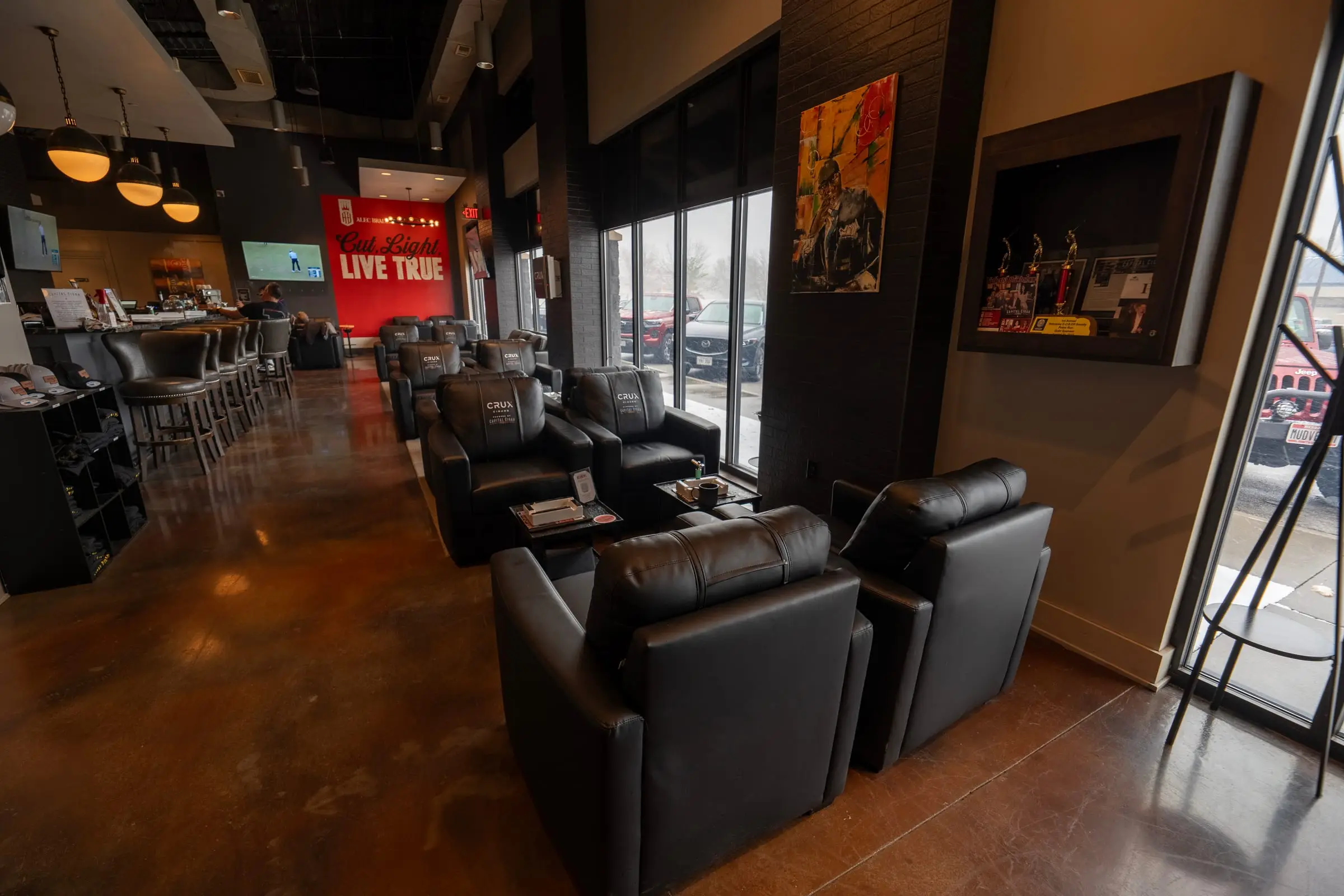
Photography — the biggest one. Stock photos cost real money to license properly, and worse, they make a Lincoln business look like a business in nowhere-in-particular. Your customers can tell. This is where doing both sides of the work pays off: I photograph the site I'm building. Headshots run $200 for a 30-minute session with 10 color-graded selects, a full brand portrait session is $450, studio editorial starts at $400, and commercial shoots start at $600 for a half-day. Real photography is the difference between a site that looks like your business and a site that looks like a template demo — for my flagship client Capital Cigar Lounge, real content pulled 89,740 Instagram views in 90 days, 38x their follower count. Generic stock does not do that.
What to demand in any web quote — mine included
Take this list to every vendor you talk to:
- Ownership in writing. Code, domain, and content are yours, transferable, no ransom on exit.
- SEO fundamentals included. Per-page titles and descriptions, a sitemap, clean URLs, structured data. These are not a $500/month add-on; they're carpentry.
- Mobile speed, with a number. Ask what the site will score on Google PageSpeed on mobile. If they won't commit to a number, they've never been asked.
- A delivery date in the contract. Mine is two weeks. Anyone's should be in writing.
- A plan for photos. If the quote is silent on imagery, the plan is stock, and you just read what that costs you.
Red flags
Walk away, or at least slow way down, when you see: a vendor who registers the domain in their own name; a monthly fee forever with nothing you own at the end — that's renting, not buying; "SEO package" pricing for things that should be built in; a portfolio where every site looks identical, or worse, loads slowly on your phone — test their own work on your phone in the parking lot, it takes thirty seconds; and pressure to sign before you've compared quotes.
Once the numbers make sense, the harder question is who to hire. I put the ten questions to ask any Lincoln web designer before you sign in their own post — take that list into every meeting, including one with me.
Get a straight answer before you spend anything
If you're pricing a website for your Lincoln business, book a free 30-minute consultation. Bring the quotes you've already collected — I'll tell you what's fair and what's padding, even if you don't hire me. And if you're weighing how a website fits with photography, video, and the rest of your marketing, here's how I work with businesses on the whole picture.
The right website for most Lincoln small businesses costs $1,200 to $4,500, gets delivered in two weeks, and belongs to you. Anyone quoting you dramatically more or suspiciously less should be able to explain exactly why.